Introduction: The Dual-Identity Masterclass in Modern SaaS
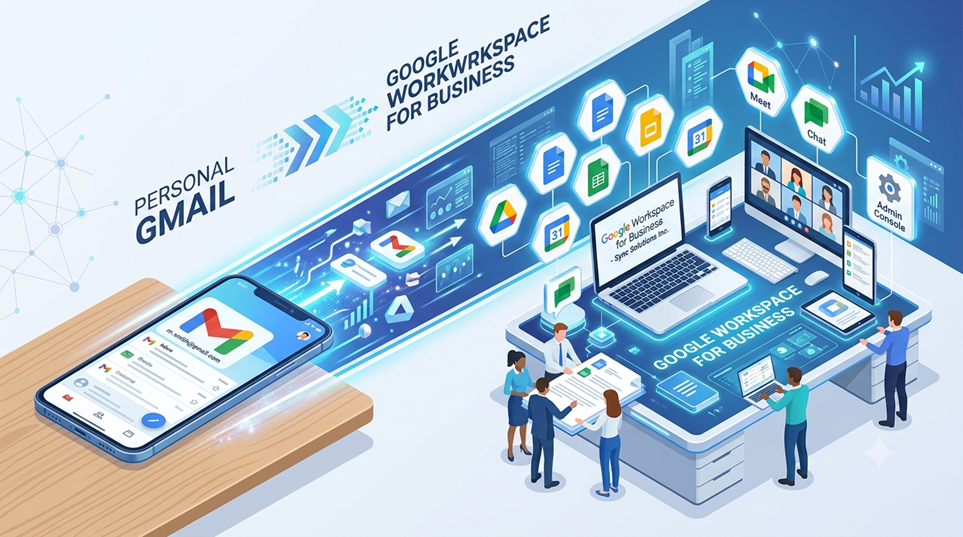
Have you ever wondered why almost every startup, boutique agency, or local coffee roasting enterprise you interact with uses Google Workspace? It feels almost automatic. A founder registers a domain name, sets up corporate email, and before the morning coffee gets cold, the entire five-person team is collaborating live on a shared Google Doc. There was no pushy enterprise sales rep involved. No week-long software deployment phase. No mandatory training seminars.
This seamless transition is not a happy accident; it is a masterclass in modern product positioning. When analyzing the Google Workspace target audience SMEs consumers dynamic, traditional marketers often make a critical mistake: they treat consumers and small-to-medium enterprises (SMEs) as two completely separate silos. They assume consumer marketing requires one playbook, while B2B SaaS demands another.
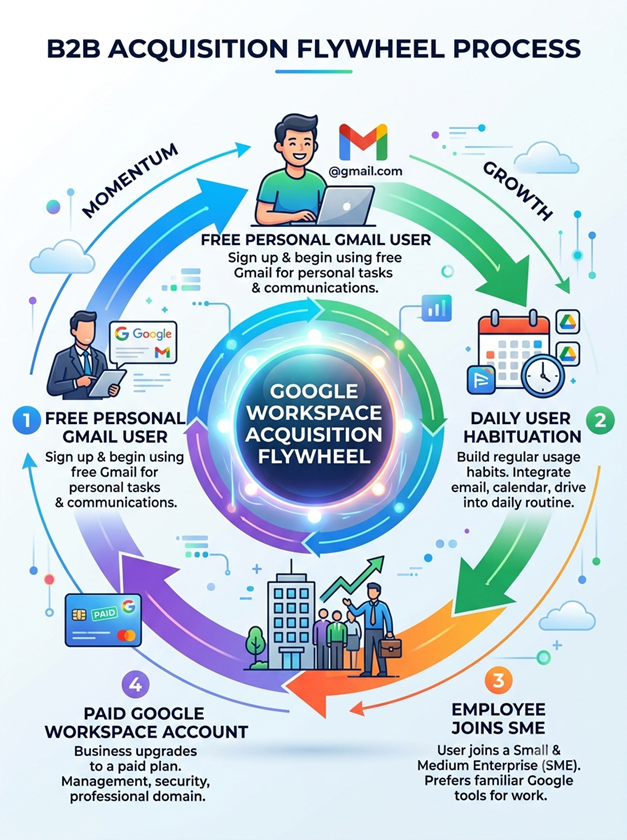
Google threw that rigid framework out the window years ago. Instead, they built an unstoppable customer acquisition flywheel where free personal accounts act as the ultimate top-of-funnel magnet for lucrative SME subscriptions. By decoding how Google turned a simple free email tool into an SME workhorse, SaaS founders, marketing directors, and growth strategists can unlock the secrets of modern B2B growth.
Breaking Down the Keyword: Google Workspace Target Audience SMEs Consumers
At first glance, mixing “consumers” and “SMEs” in a single audience targeting strategy sounds counterintuitive. Consumers care about zero-cost convenience, personal storage, and simple interfaces. SMEs care about security compliance, custom branding, team collaboration, and predictable monthly costs.
Google’s genius lies in recognizing that these two groups are not distinct populations—they are simply the same human beings at different times of the day. The college student using Google Docs for term papers today becomes the operations manager setting up cloud workflows for a scaling tech startup tomorrow.
Pillar 1: The Trojan Horse Strategy (Consumer-to-SME Conversion)
Riding the 3-Billion-User Consumer Wave
Imagine having a lead generation pool of over 3 billion active users who already interact with your interface every single day. That is the massive operational foundation of @gmail.com. While traditional B2B software companies burn millions of dollars on cold email blasts, LinkedIn sponsored posts, and elaborate trade show booths just to introduce their brand, Google sits quietly inside the pocket of nearly every professional on Earth.
The free consumer tier isn’t a cost center for Google; it is their most potent customer acquisition channel. By providing a reliable, free ecosystem for personal communication, Google embeds its software into daily human habit.
[ Free Personal Gmail ]
│
▼
[ Daily Habit & Tool Familiarity ]
│
▼
[ Employee Joins or Starts an SME ]
│
▼
[ User Demands Google Workspace ]
│
▼
[ Paid B2B Enterprise Account ]
Bypassing Cold Outreach: Why Habituation Beats Sales Demos
Think about the traditional enterprise software sales cycle. It is slow, expensive, and filled with friction. A sales representative pitches a prospect, schedules a demo, counters objections from end-users who hate learning new software, and waits weeks for procurement approval.
Google bypasses this entire ordeal through consumer habituation. When a lean business owner decides to digitize operations, they rarely research brand-new software suites from scratch. They instinctively reach for the tools they already trust.
The Bottom-Up Adoption Flywheel Explained
This bottom-up motion creates internal demand within companies. If an SME hires three new remote specialists, those specialists do not need a three-day onboarding course to figure out how Google Drive, Google Meet, or Google Docs work. They have been using them for a decade. The employee tells the boss, “Let’s just drop these files into a shared Drive link.” The decision is made before a competitor’s sales call even gets scheduled.
Pillar 2: The “Frictionless Onboarding” Advantage
Erasing IT Overhead for Lean Businesses
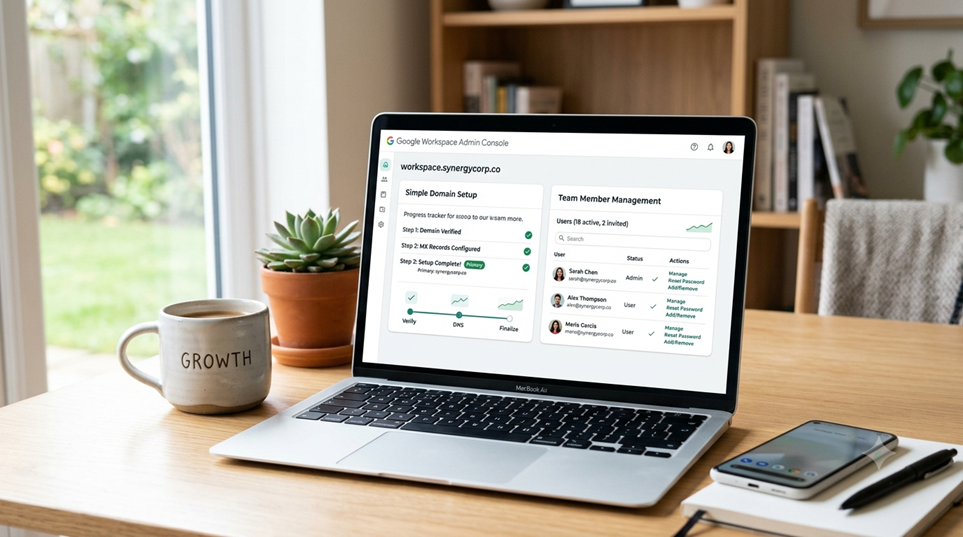
Small-to-medium enterprises operate under tight resource constraints. Unlike Fortune 500 corporations, an SME with 15 employees rarely has a dedicated Chief Information Officer or an internal IT helpdesk team. Software setup falls on the shoulders of an already overworked founder or office manager.
Legacy enterprise platforms like Microsoft 365 historically catered to deep IT departments—offering complex admin hierarchies, intricate group policies, and dense configuration menus. Google spotted this weakness and built its Workspace target audience strategy around absolute simplicity.
From name@gmail.com to name@company.com in 3 Clicks
The bridge from consumer user to paying business client is engineered to take minutes, not days. Setting up custom domain emails (name@company.com) through Google Workspace feels identical to setting up a personal account, save for a quick domain verification step.
+————————————————————————-+
| TRADITIONAL vs. GOOGLE ONBOARDING |
+————————————————————————-+
| Feature | Legacy Enterprise SaaS | Google Workspace |
+———————–+————————-+———————–+
| IT Setup Required | High (Dedicated Staff) | Zero (Self-Serve) |
| Learning Curve | Steep (Training Needed) | Instant (Identical UX)|
| Time-to-Deployment | Days or Weeks | Under 15 Minutes |
| Admin Complexity | Dense Policies | Intuitive Dashboard |
+————————————————————————-+
By removing setup anxiety, Google makes upgrading an impulse decision for expanding businesses rather than a dreaded quarterly infrastructure project.
UX Superiority: Why Familiarity Wins Enterprise Deals
Software friction kills productivity. When tools feel clunky, employees find workarounds that create security risks. Because Google Workspace maintains a clean, uniform User Experience (UX) across both personal consumer accounts and paid SME subscriptions, context-switching disappears. A user can toggle between their personal inbox and their corporate workspace with a single click in the top right corner of their browser screen.
Pillar 3: Native Value Bundling (The AI Factor)

Retaining Price-Sensitive SMEs in a Volatile Market
Getting an SME to sign up for a subscription is one thing; keeping them subscribed when economic headwinds hit is another. Small businesses are notoriously price-sensitive. When expenses rise, founders immediately audit their monthly software stack, slashing redundant SaaS seats without hesitation.
Google counters this churn risk through aggressive native value bundling. Instead of charging SMEs extra for basic security, cloud storage upgrades, or video conferencing tools, Workspace bundles everything into clear, per-user pricing tiers.
Generative AI as an Operational Force Multiplier
As artificial intelligence transformed the tech landscape, Google integrated its advanced AI capabilities directly into the Workspace ecosystem. Rather than forcing SMEs to buy separate third-party AI writing aids, research tools, and video editor subscriptions, Google baked these tools directly into the core environment:
- Gemini for Workspace: Assists lean teams in drafting proposals, summarizing long email threads, and analyzing spreadsheet data directly inside Docs, Gmail, and Sheets.
- NotebookLM: Serves as a personalized research assistant that synthesizes complex business documents into digestible knowledge bases.
- Google Vids: Empowers non-technical marketing staff to build polished video presentations without hiring external media agencies.
Deep Integration: Gemini, NotebookLM, and Ecosystem Lock-in
By embedding AI capabilities right where work happens, Google builds a defensive moat around its SME audience. Once a small agency builds its operating procedures around shared Gemini prompts, NotebookLM research repositories, and automated Sheets workflows, switching to a competitor becomes operationally painful. The ecosystem lock-in is complete.
Pillar 4: Actionable B2B Marketing Lessons for SaaS Founders and Marketers

Google’s macro-strategy provides a blueprint for any business trying to scale B2B customer acquisition. How can SaaS companies, digital agencies, and B2B brands apply these lessons to their own growth funnels?
Designing a High-Converting Product-Led Growth (PLG) Funnel
If your B2B product requires a 45-minute sales presentation just to demonstrate basic utility, you are losing market share to simpler competitors.
- Lower the barrier to entry: Offer a free individual tier or a frictionless trial that delivers immediate “aha!” value without requiring a credit card or sales conversation.
- Focus on habit creation: Design your onboarding sequence to get individual users hooked on daily execution before pitching team-wide manager seats.
Leveraging Personal Consumer Familiarity to Close B2B Sales
Never underestimate the power of brand warmth. If prospects encounter your brand in their low-stakes personal lives, their resistance to your business pitches vanishes.
- Build content, free utilities, and light tools targeted at individual practitioners within your target industries.
- Turn those individual advocates into internal champions who pitch your enterprise product to their leadership team for you.
Positioning Around Operational Simplicity over Bloated Features
Feature lists do not close SME sales—outcomes do. Small business owners are exhausted by feature bloat that slows down their daily routines.
- Position your offerings around speed, clarity, and time-to-value.
- Frame your product as a turn-key solution that works right out of the box without requiring expensive consulting fees or technical management.
Conclusion: The Flywheel That Keeps on Spinning
Google’s dominance in the SME sector is not a mystery—it is the result of a masterfully executed target audience strategy. By viewing personal consumers and business buyers not as separate entities, but as continuous stages of a single user journey, Google created a self-sustaining acquisition machine.
They win the consumer early with free, indispensable tools. They earn the startup’s trust with frictionless onboarding and affordable domain integration. And they lock in the scaling enterprise with deep AI integration and native value bundling.
For digital marketers, business leaders, and SaaS builders, the lesson is crystal clear: remove friction, build consumer trust at scale, and let habituation do the heavy lifting for your B2B growth.
Frequently Asked Questions (FAQs)
1. What is the core target audience for Google Workspace?
Google Workspace targets a dual audience: individual consumers who use free accounts for personal organization, and small-to-medium enterprises (SMEs) along with large institutions that require professional custom email domains, admin controls, security compliance, and team collaboration tools.
2. How does Google convert free personal Gmail users into paid Google Workspace customers?
Google uses a Product-Led Growth (PLG) strategy centered on habituation. Because billions of users are already familiar with the interface of free Gmail and Google Drive, business owners and employees naturally prefer to adopt these same familiar tools when starting or working at a business.
3. Why do SMEs often prefer Google Workspace over Microsoft 365?
SMEs often choose Google Workspace because of its zero learning curve, self-serve administration, and cloud-native simplicity. Smaller teams without dedicated IT departments can set up custom corporate emails and shared cloud drives in minutes without complex software installations.
4. How does generative AI fit into Google Workspace’s SME retention strategy?
Google embeds AI tools like Gemini and NotebookLM directly into Workspace applications. This provides lean SME teams with powerful productivity multipliers—like automated writing, data analysis, and document synthesis—without forcing them to buy expensive third-party AI software subscriptions.
5. How can SaaS companies apply Google’s audience strategy to their own business?
SaaS companies can adopt Google’s model by building a freemium or self-serve product tier that appeals to individual practitioners, reducing setup friction to deliver instant utility, and empowering end-users to become internal brand champions within their companies.
Read More:
Alternative Search Engines to Google
Optimize AI Content for Google